
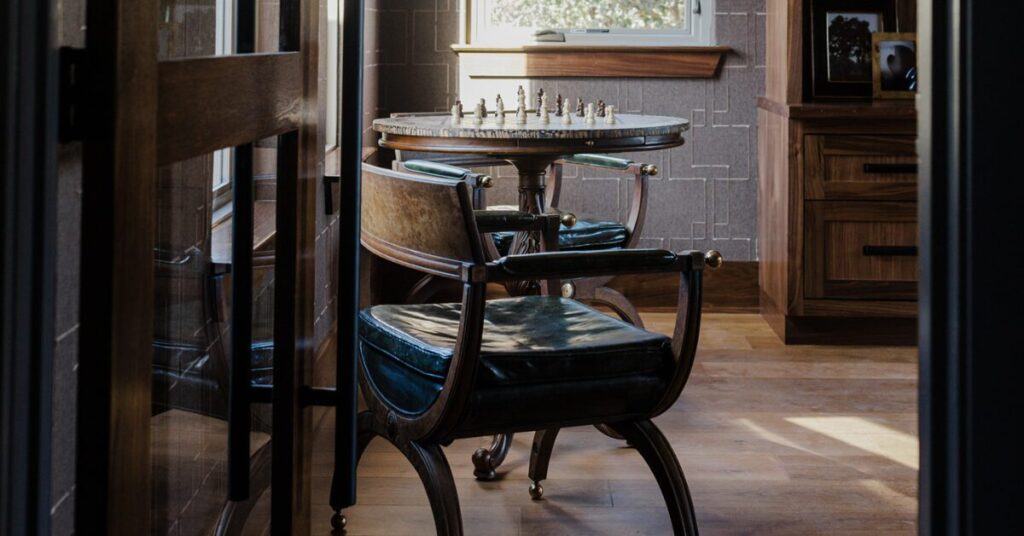
Last month, we simplified the living room—the place we gather in motion. This month, we step into the personal study—the place we gather in thought.
Living rooms shape how we connect with others. A study shapes how we connect with ourselves. Because when we sit down to think, the room begins to reveal things the living room doesn’t—our unfinished ideas, our distractions, and the quiet ways we define who we are.

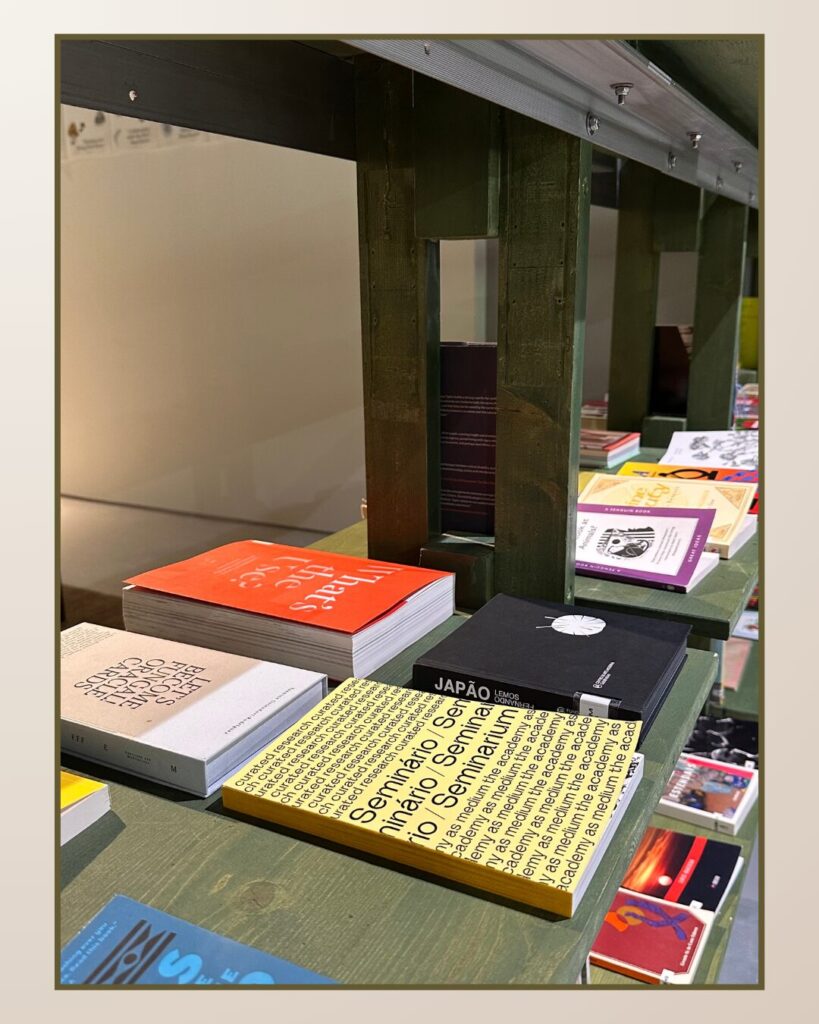
While walking through Spain and Portugal, I was struck by local bookstores and sacred spaces that felt intentional—not excessive. The architecture didn’t overwhelm; it held.
But that level of calm doesn’t begin with wallpaper or built-ins; it begins with identity.
Step One—Simplifying Is Always Client-Led
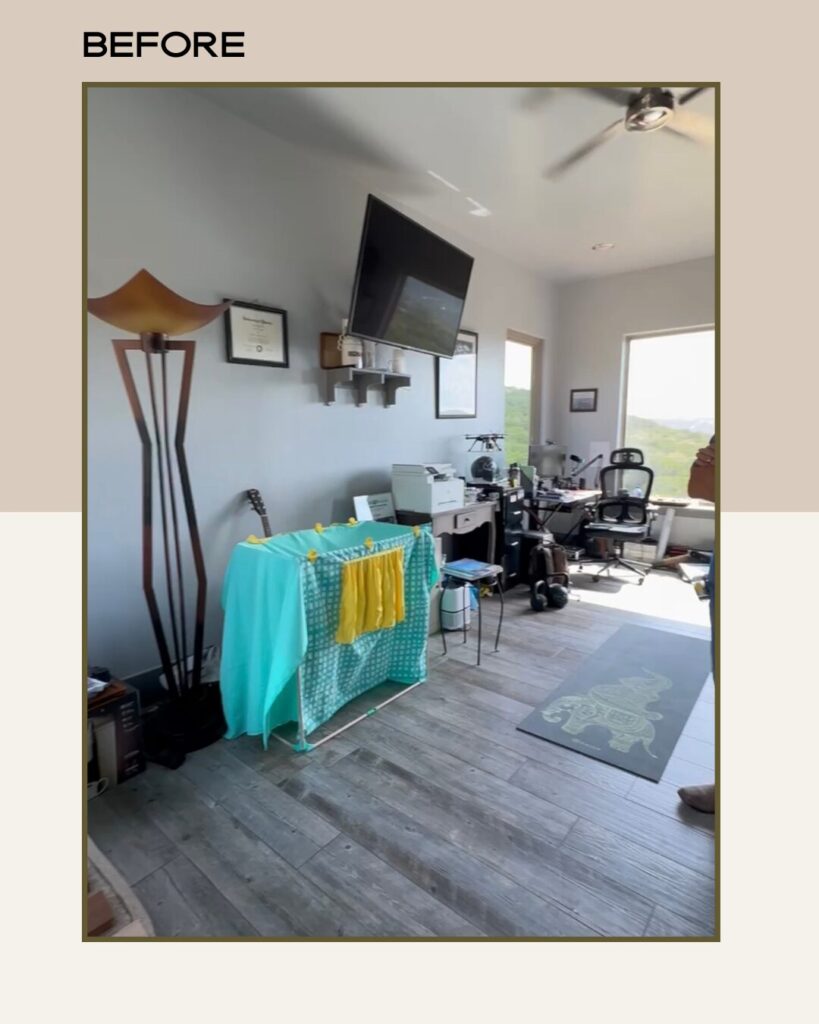
At Hivehouse Co., I do not simplify for my clients; I guide them. Before I built a single shelf at Lake Crest, I walked through the room with them and asked, “Who is the space serving now?” The study once supported an extremely busy business owner—papers, materials, and furniture all reflected a high output season of life. But retirement was approaching, so I began with questions:
“Does this document still reflect your current role?”
“Does this furniture reflect urgency or legacy?”
“Is this here because you use it, or because it has always been there?”
The client made the decisions; I provided the framework.
Step Two—Remove What Belongs to a Previous Season
Simplifying is editing the story of a room. I removed business-related archives that no longer needed daily presence, excess paper storage, and furniture pieces that visually crowded the space. I significantly reduced the number of visible categories before introducing the architecture.
In nature, shedding is seasonal—rooms are no different.
Step Three—See the Structure Before It Exists
During the first walkthrough before measuring, my mind does something similar to what happens in the ceiling scenes in The Queen’s Gambit. I see the finished structure playing out in real time across the walls. I see:
Where weight should anchor.
Where rhythm should repeat.
Where symmetry is slightly off.
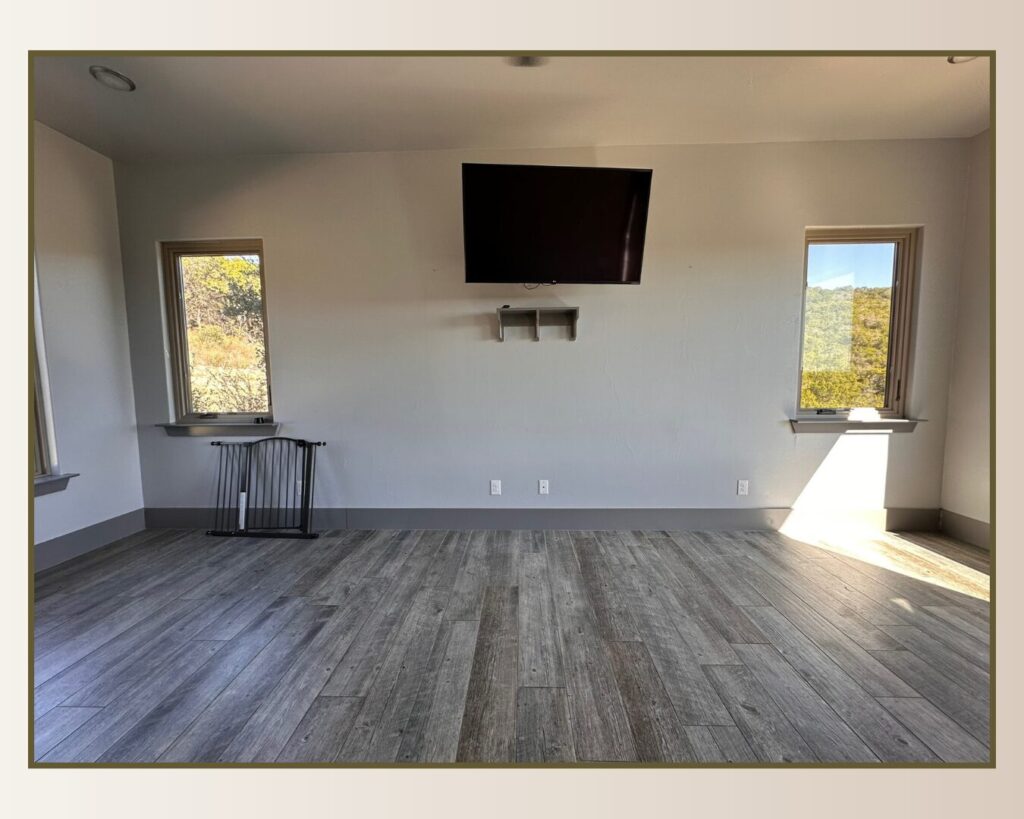
The walls were blank—but blank doesn’t always mean peaceful. Sometimes it means unfinished, and this room needed structure, not empty space.
The Simplified Living Study Framework
If you’re simplifying your own study, here are some helpful steps:
- Ask who the room is serving now.
- Guide yourself through removing items tied to a former identity.
- Reduce the number of visible categories by at least 30%.
- Do not build on top of clutter.
- Only after simplifying should you consider structural changes.
Once the identity of a room becomes clear, the next decisions become easier.
That’s exactly what happened in the Lake Crest Study.
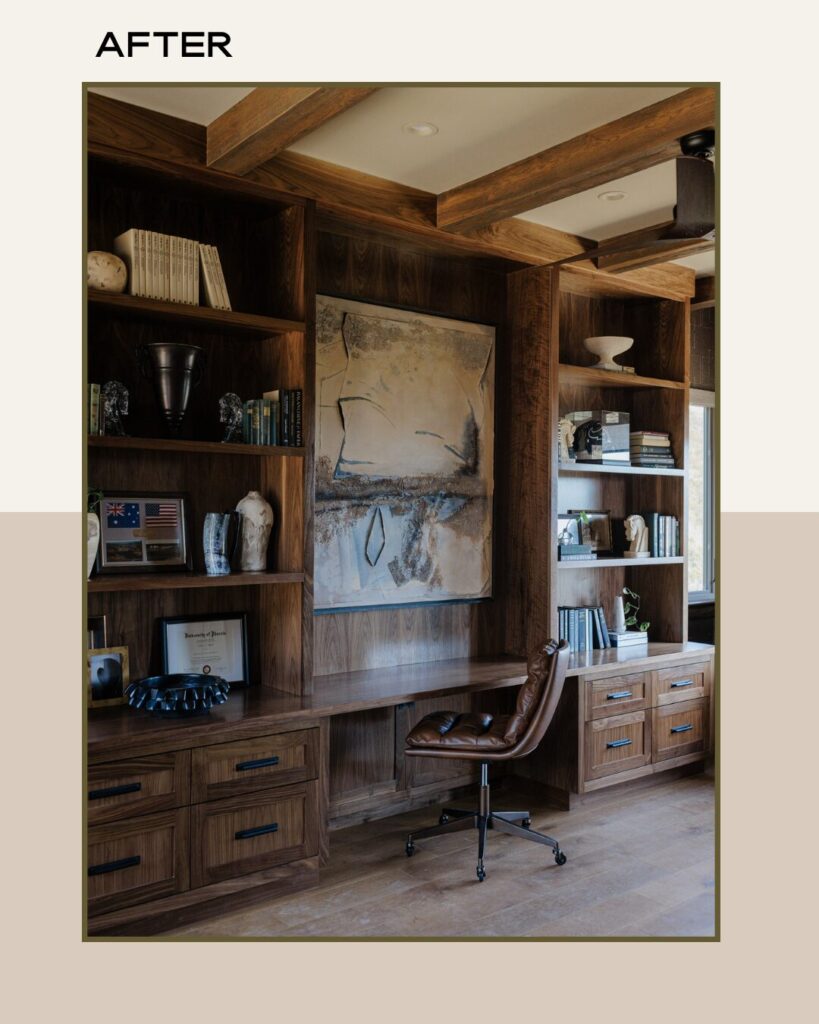
Before I introduced a single built-in shelf or architectural detail, the room had already begun to shift. Not because I added something new—but because I had a better understanding of what no longer belonged in the season ahead.
In the next post, we’ll step into the organizing phase and explore how the architecture of the Lake Crest Study created structure, containment, and calm.