
If blog number one was about identity, blog number two was about structure, and blog number three is about atmosphere.
Styling is never first—it’s the final layer, and it only works when the foundation is steady. At Lake Crest, styling wasn’t about filling space; it was about shaping the feeling.
Step One: Let the Walls Carry Weight
Before furniture ever enters the room, I layer texture into the architecture. Installed by Hi-Country Paperworks, fine Belgian Omexco wallpaper transformed the walls—flat drywall changed to a dimensional surface. Subtle, linen-like, architectural. Paint reflects, texture absorbs.
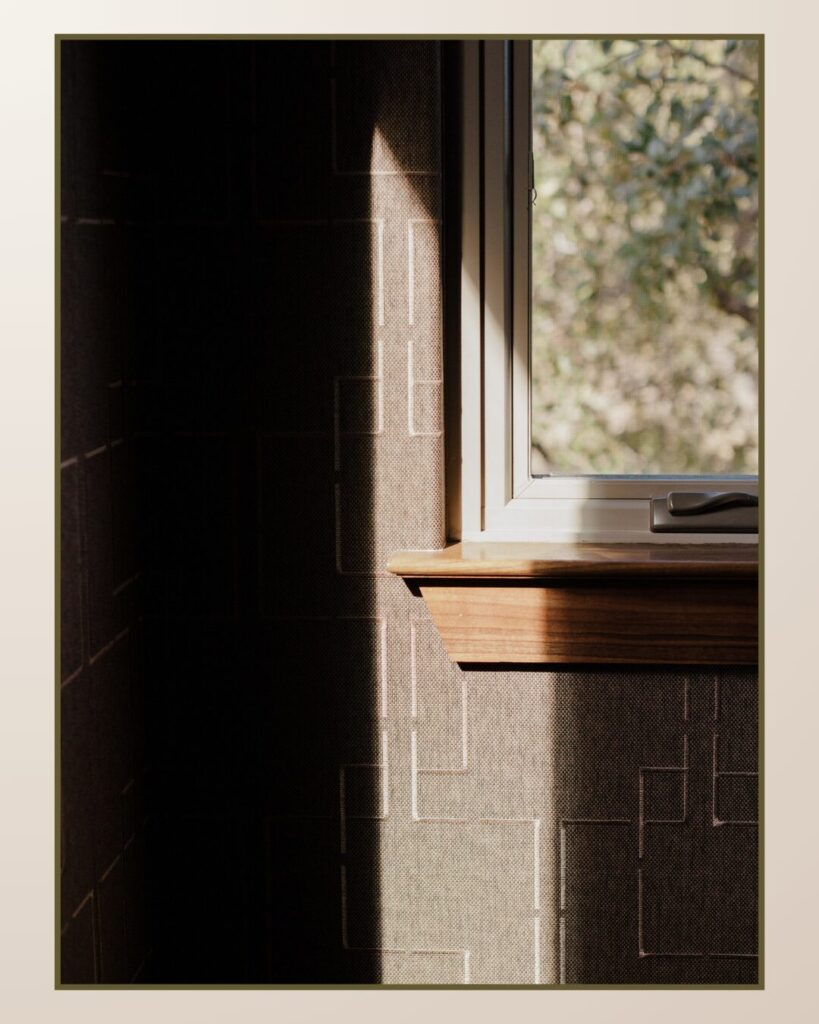
In Lisbon, while standing inside the Modern Art Center, I studied Carlos Bunga’s work exploring shelter, instability, and memory. His work reminded me that walls are not neutral—they carry a story. The wallpaper in Lake Crest does the same; it quietly grounds the space without pattern overwhelm.
Step Two: Filter the Light, Don’t Block It
We layered the windows with semi-sheer shades—not blackout, not harsh—filtered. Filtered light softens a room without muting it. When sunlight passes through semi-sheer fabric, it behaves like light through a tree canopy—diffused, natural, calming.
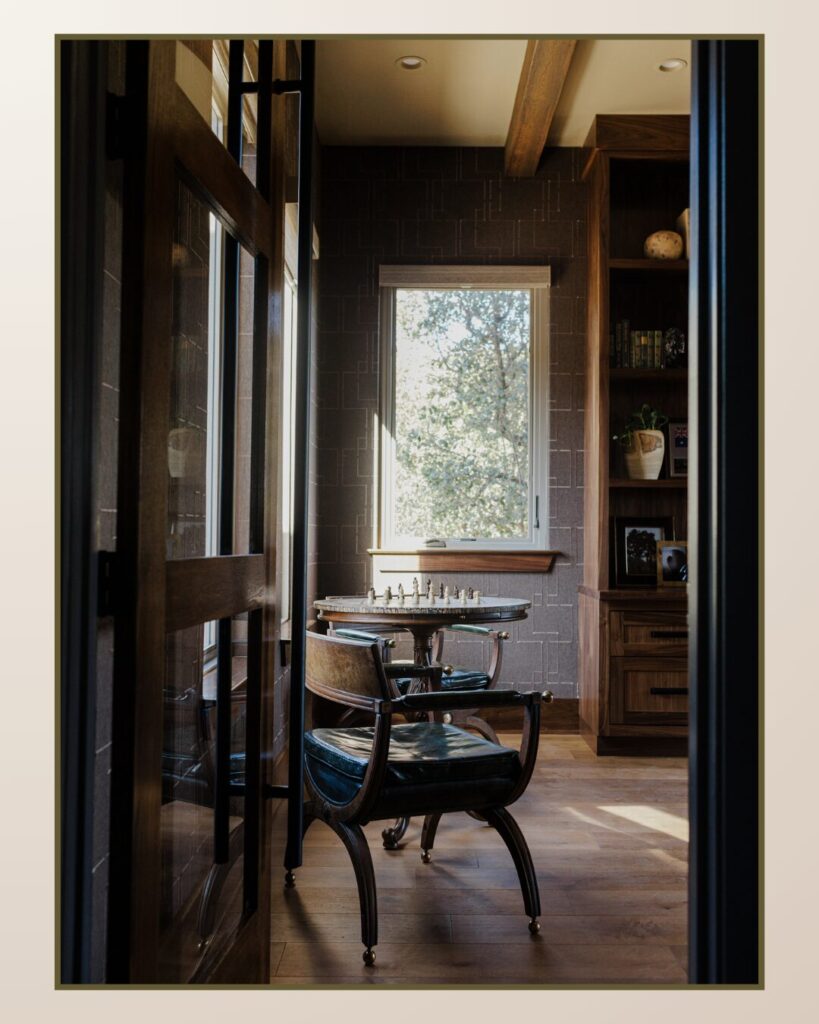
Light control is styling. Atmosphere is created by shadow as much as objects.
Step Three: Anchor With Meaning, Not Accessories
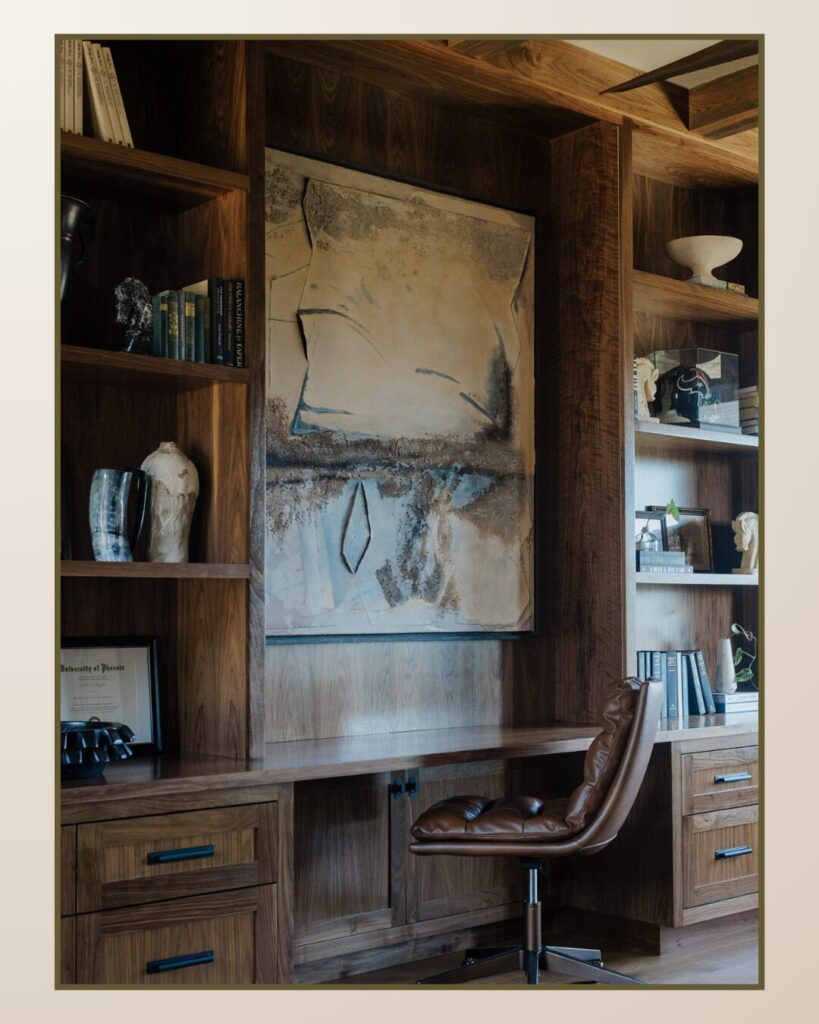
I fell in love with the rustic and raw Lason Framed Wall Art from CB2. This piece anchors the room—moody, expansive, controlled. Inspired by nature, decay, and layered texture, it reflects maturity without chaos. Large-scale art reduces the need for smaller decorative clutter. One statement replaces 10 fillers.
The handcrafted chess table commands presence from the moment of entry. The 1950’s Widdicomb Empire Chairs bring historical weight. The Nouhaus heated, massage recliners create modern comfort without visual excess—every piece earns its place.
Step Four: Respect Restraint, the No-Rug Decision
As a designer, I love grounding a room with a rug, but this client requested no rug—and that mattered. Hardwood floors remained exposed—honest, clean, and low maintenance. Washable rugs are beautiful, but Simplified Living honors how people actually live, including with grandchildren and dogs. Restraint is sometimes the most sophisticated design move.
Step Five: Choose Sensory-Friendly Materials
If you love cozy and layered, choose soft organic materials—brushed cotton, linen blends, smooth wool. Avoid itchy knits, and limit throws to two per seating zone. Your goal is inviting, not overcrowded. Styling should feel calm against the skin, not decorative for decoration’s sake.
Step Six: Hide the Noise
Even beautifully styled rooms can feel tense if cords and tech interrupt the visual line. The hidden bookshelf door conceals the tech closet entirely—routers, wiring, and infrastructure present but invisible.
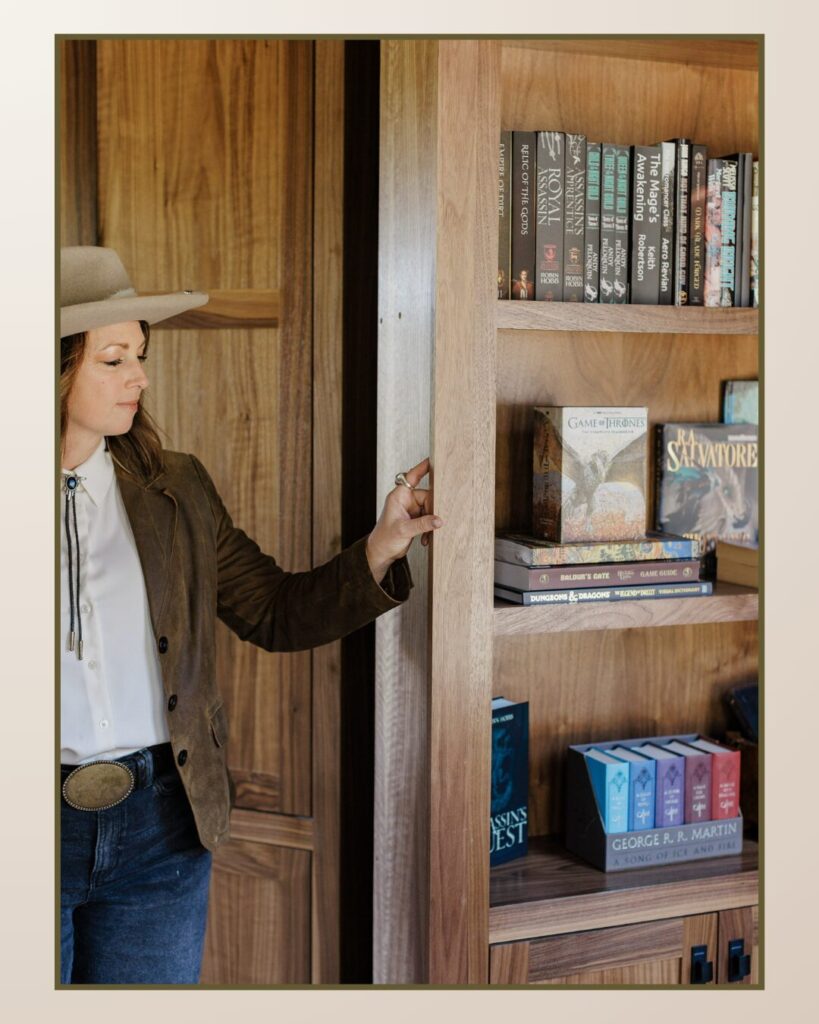
In Portugal, I reflected on the idea that we don’t just live in our homes, we carry them. Styling is emotional architecture. When visual noise disappears, emotional weight often does, too.
Styling for Different Personalities
If you lean toward a masculine, minimal style, let wood and proportion carry the room. If you love collected and storied items, display fewer artifacts with more breathing room. If you crave softness, layer filtered light and tactile fabrics. If you’re tech-forward, conceal infrastructure completely. Style should amplify who you are becoming, not who you were five years ago.
Final Reflection
Over the past month, I’ve walked through the full rhythm of a space—simplifying what no longer belongs, organizing what remains, and styling with intention.
In Spain, I was reminded to slow down, and in Lisbon, I was reminded that shelter holds more than just structure. Back home at Lake Crest, those truths came together in a way that felt familiar.
Because at the end of the day, our homes aren’t just where we live—they’re where we gather, where we rest, and where we hold the people and moments that matter most. Simplified Living isn’t about creating perfect rooms. It’s about creating spaces that support your life as it is and as it’s evolving.
As I move into April, I’ll be shifting into spaces that serve us in a different way—the ones we move through every day, often without thinking twice about how they’re actually working. And sometimes, those are the spaces that need the most attention.
That’s Simplified Living as an atmosphere. Grounded in purpose. Curated for everyday living.